

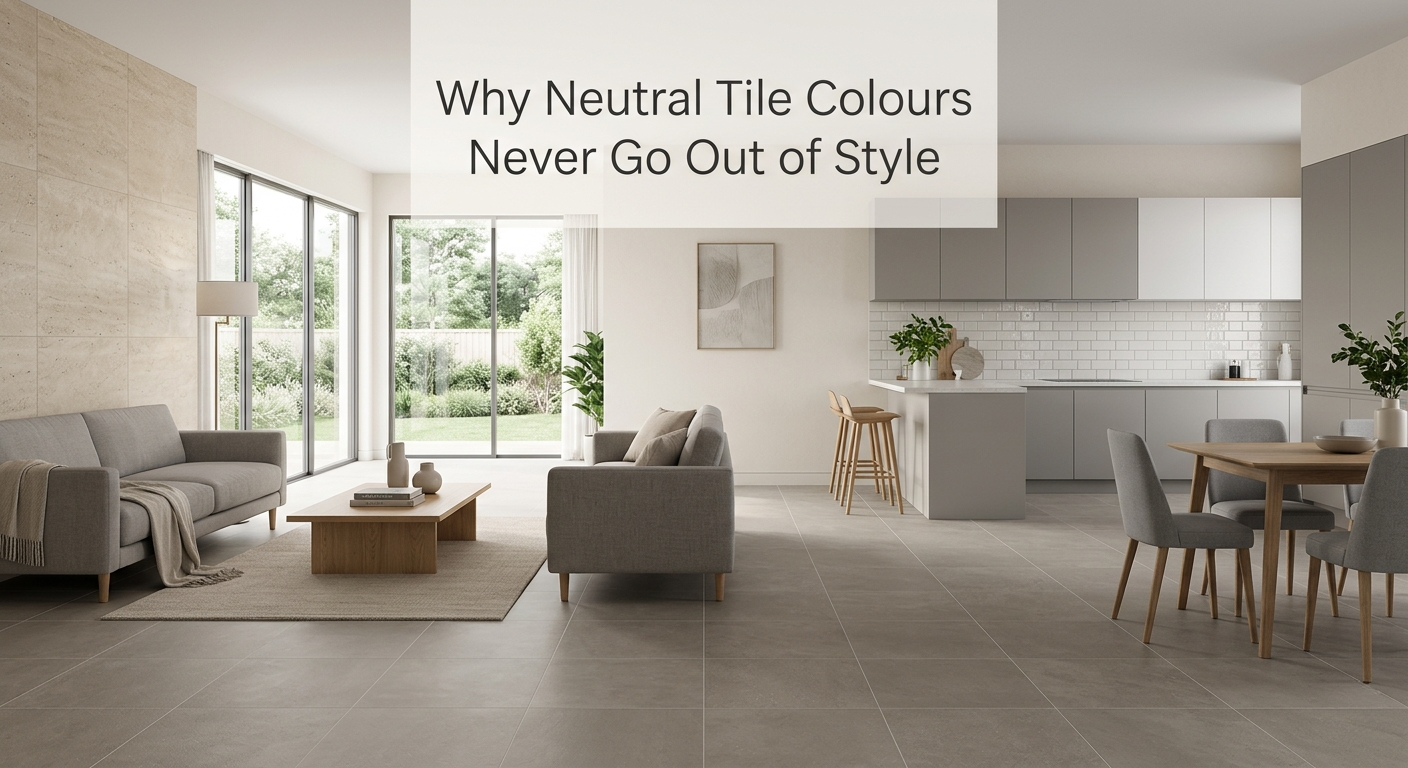

Trends in interior design change quickly, but some elements remain consistent over time. Neutral tile colours are one of those elements. While bold patterns and vibrant shades may come and go, neutral tones continue to be widely used in both residential and commercial spaces.
The reason is simple. Neutral colours offer flexibility, balance, and long-term usability. They work well with different styles, adapt to changing design preferences, and maintain their appeal even after years of use. Because of this, they are often considered a safe yet effective choice for flooring and wall applications.
What Are Neutral Tile Colours?
Neutral tile colours typically include shades that are subtle and understated. These colours do not dominate a space but instead create a balanced background.
Common neutral tones include:
- White
- Beige
- Grey
- Cream
- Taupe
- Soft brown
These colours are often inspired by natural materials such as stone, marble, and concrete. As a result, they create a calm and timeless environment.
Why Neutral Colours Stay Relevant Over Time
One of the main reasons neutral tiles never go out of style is their ability to adapt. Unlike bold colours, which can feel outdated as trends change, neutral shades remain visually consistent.
Neutral tiles do not rely on current design trends. Instead, they provide a foundation that works with both modern and traditional interiors. Because of this, homeowners and designers often prefer them for long-term projects.
Flexibility in Interior Design
Neutral tile colours allow more flexibility in design. They act as a base that supports different furniture styles, wall colours, and décor elements.
For example:
- A beige floor works well with both wooden and modern furniture
- Grey tiles complement industrial as well as minimal interiors
- White tiles create a clean and adaptable background
Because neutral tiles do not overpower the space, they make it easier to update interiors without replacing flooring.
Creating a Spacious and Open Look
Neutral colours help create a sense of openness. Light shades, in particular, reflect more light and make rooms appear larger.
In smaller spaces, using light neutral tiles can significantly improve the perception of space. This is why they are commonly used in apartments and compact homes.
Even in larger spaces, neutral tones help maintain visual balance without making the room feel overwhelming.
Easy to Maintain and Practical
Another reason neutral tiles remain popular is their practicality.
- They hide dust better than very dark colours
- They do not show stains as easily as pure white surfaces
- They require less frequent cleaning compared to highly reflective finishes
Because of these advantages, neutral tiles are often used in high-traffic areas such as living rooms, hallways, and commercial spaces.
Compatibility with Different Tile Finishes
Neutral colours work well with all types of tile finishes.
- Glossy neutral tiles create a bright and polished look
- Matte neutral tiles offer a soft and modern appearance
- Natural finishes enhance realism and texture
This flexibility allows designers to achieve different looks using the same colour palette.
Suitable for Both Floors and Walls
Neutral tiles are not limited to flooring. They are equally effective for wall applications.
Flooring
Neutral tiles create a consistent base that connects different areas of a home. They work especially well in open layouts.
Walls
On walls, neutral tones create a clean and elegant background. They are often used in bathrooms, kitchens, and feature walls.
Neutral Colours in Modern Interior Trends
Modern design trends focus on simplicity, minimalism, and natural elements. Neutral colours align perfectly with these principles.
Popular trends include:
- Stone-look tiles
- Concrete-inspired finishes
- Soft matte surfaces
These styles rely heavily on neutral tones to achieve a refined and contemporary look.
Long-Term Value and Timeless Appeal
Replacing tiles can be expensive and time-consuming. Therefore, choosing a timeless option is important.
Neutral tiles offer long-term value because they:
- Do not go out of fashion
- Maintain visual appeal over time
- Reduce the need for frequent renovation
This makes them a practical choice for homeowners and developers alike.
Manufacturers like Rollence Granito provide a wide range of neutral tile collections that suit both modern and traditional interiors.
Neutral Tiles in Commercial Spaces
Neutral colours are widely used in commercial environments.
Why They Work Well
- Create a professional appearance
- Maintain consistency across large areas
- Require less maintenance
Offices, retail stores, hotels, and public spaces often use neutral tiles to ensure long-term usability.
Combining Neutral Colours with Accents
Neutral tiles do not mean boring design. They can be combined with accent elements to create visual interest.
Examples include:
- Adding textured walls
- Using contrasting furniture
- Introducing decorative tiles in small areas
This approach allows for creativity while maintaining a balanced base.
Common Mistakes to Avoid
Even when choosing neutral tiles, some mistakes can occur.
1. Using Only One Shade Everywhere
This can make the space look flat. Mixing tones adds depth.
2. Ignoring Lighting
Neutral colours can appear different under various lighting conditions.
3. Choosing the Wrong Finish
Glossy or matte finishes should match the room’s purpose.
4. Not Testing Samples
Always check tiles in actual lighting before finalizing.
Avoiding these mistakes ensures better results.
Practical Tips for Choosing Neutral Tiles
- Choose lighter shades for small spaces
- Use medium tones for high-traffic areas
- Combine textures to add depth
- Match grout colour for seamless look
- Test tiles under real lighting
These steps help achieve both visual and functional benefits.
FAQs
Why are neutral tile colours popular?
They offer flexibility, timeless appeal, and compatibility with different design styles.
Do neutral tiles make a room look bigger?
Yes, especially lighter shades, as they reflect more light.
Are neutral tiles suitable for commercial use?
Yes, they are widely used due to their durability and low maintenance.
Do neutral colours go out of trend?
No, they remain consistent across changing design trends.
Final Thoughts
Neutral tile colours remain a reliable choice in interior design. Their ability to adapt, maintain visual balance, and provide long-term value makes them suitable for a wide range of applications.
Whether used in residential or commercial spaces, neutral tones continue to support modern design needs without losing relevance. Brands like Rollence Granito offer diverse neutral tile options, helping create interiors that are both practical and visually appealing.