

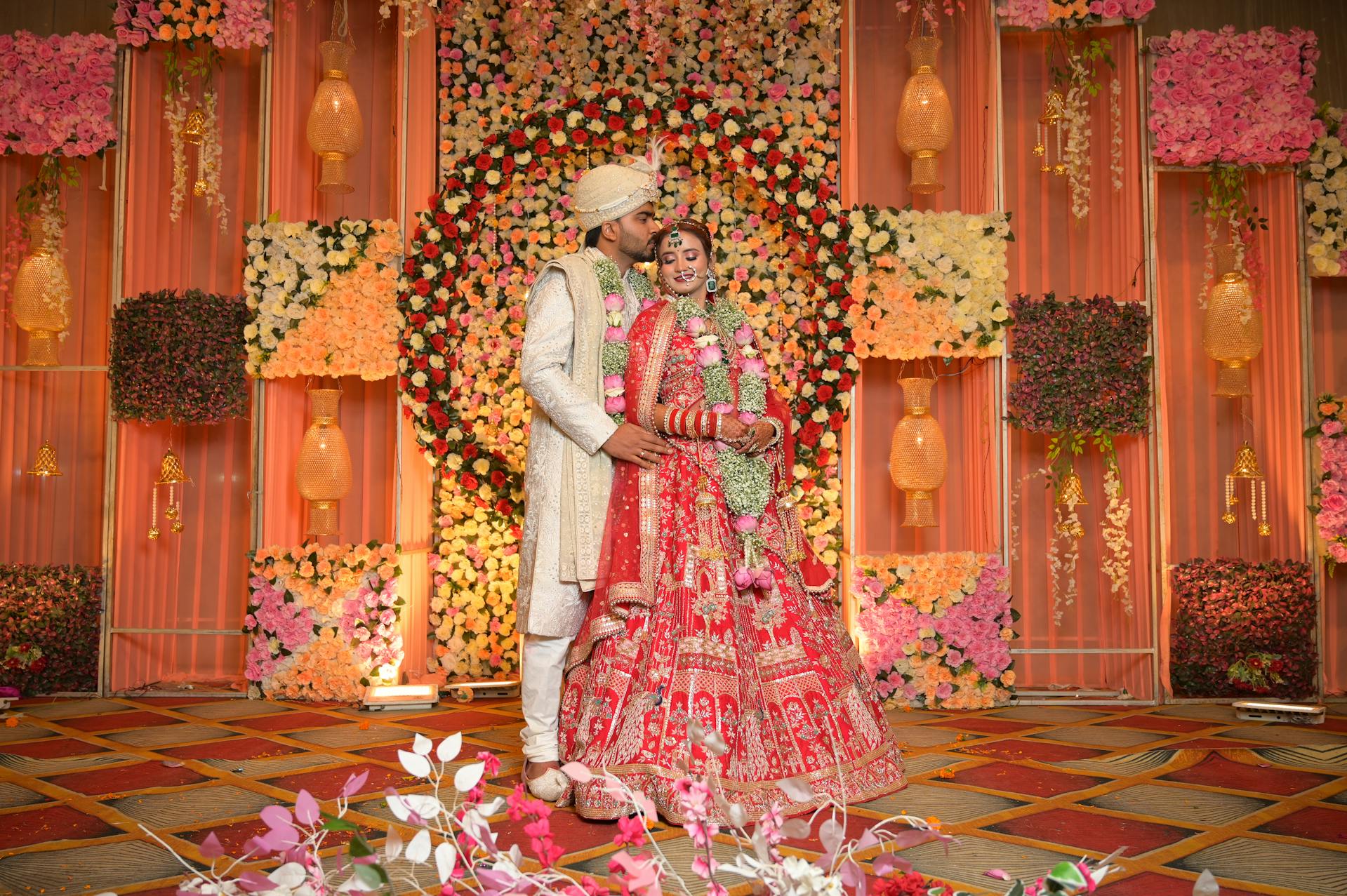

My friend Priya got married in a five-star hotel ballroom in Delhi three years ago. The flowers were perfect. The lighting was perfect. The choreography, the catering, the table arrangements — all of it was exactly what she had planned for eighteen months. I asked her about it last year, and she paused for a moment before saying, quietly, that she barely remembers it. It felt like someone else’s wedding.
Six months after that conversation, I attended a destination wedding in Rishikesh. The flowers were not perfect. The lighting was whatever the Himalayan sunset decided to do that evening. And I remember every single moment of it with a clarity I cannot fully explain.
That difference — between a wedding that is designed to perfection and a wedding that is anchored in a real place — is the whole argument for Rishikesh. And once you have experienced it, it is very hard to settle for anything else.
Why Rishikesh is not just another pretty venue
Spend five minutes on any wedding planning website and you will find endless lists of “best destination wedding locations in India.” Rishikesh appears on most of them now, usually with a photograph of the Ganges at golden hour and a few lines about the mountains. What those lists rarely explain is why Rishikesh produces a different kind of wedding — not just a prettier one.
The answer has to do with what the place actually is. Rishikesh is not a resort built for weddings. It is not a heritage property converted for events. It is an ancient town at the point where the sacred Ganges leaves the Himalayas — a place that has been receiving pilgrims, seekers, and travellers for centuries, long before destination weddings were a concept anyone had heard of.
When you hold a destination wedding in Rishikesh, you are not borrowing a decorated room. You are placing your ceremony inside a living landscape that already carries enormous meaning. The river is sacred. The mountains are ancient. The evening Ganga Aarti has been performed on these banks for longer than most countries have existed. That context does not make your wedding more expensive. It makes it more true.
“Most venues ask you to bring the meaning with you. Rishikesh already has it. Your job is simply to show up and not get in the way of what the place already does.”
What a destination wedding in Rishikesh actually looks like
I want to move past the romantic language for a moment and describe the concrete reality, because I think it is more persuasive than any amount of poetic description.
The morning of the wedding I attended in Rishikesh began at sunrise on a ghat. Not because it was scheduled. Because several guests — including the groom’s father, who is not a particularly spiritual man — found themselves walking to the river before anyone else was awake. The sound of the water and the cold morning air had a way of pulling people out of their hotel rooms without asking.
The ceremony itself took place in the late afternoon on a riverside lawn. The pandit began the rituals as the light was shifting from white to gold. By the time the vows were exchanged, the Himalayan light had turned everything warm and amber and slightly unreal. The photographer told me afterwards that he had barely edited a single photograph. He did not need to.
The reception ran until the hills made it difficult to continue. Folk musicians played something old and regional that nobody in the wedding party had requested but everyone loved. The river was audible the entire time. And at some point in the late evening, the Ganga Aarti ceremony drifted across the water from a nearby ghat — bells and light and chanting mixing with whatever was playing from the speakers — and the whole thing became something I do not have a word for.
That is a destination wedding in Rishikesh. Not perfect. Not controlled. Completely unforgettable.
Choosing the right venue
The venue decision is the most important practical choice in planning a destination wedding in Rishikesh, and it deserves more attention than most couples give it early in the process.
The most practical choice for guest lists above fifty. River-facing lawns and terraces, full event coordination, in-house catering, and block accommodation under one roof. These properties handle the logistics complexity so you do not have to. Capacity typically runs from fifty to three hundred guests.
For couples who want something genuinely intimate — usually twenty to eighty guests — the boutique properties tucked into forested hillsides above the Ganges offer extraordinary privacy and a closer connection to the landscape. Smaller staff, stronger atmosphere, a ceremony that feels personal rather than produced.
The most spiritually significant option. A ceremony conducted directly on the steps of the Ganges, coordinated with local authorities for the required permits, and often timed around the Ganga Aarti. Best for smaller gatherings. The photographs and the meaning are unmatched by anything else available in Rishikesh.
Visit your shortlisted venues in person before signing anything. Photographs cannot capture the sound of the river from that particular terrace, the quality of the afternoon light at that angle, or the feel of the space when it is empty. These things matter enormously for a ceremony, and they are impossible to evaluate remotely.
Best time of year for a destination wedding in Rishikesh
Timing is the decision that couples most often get wrong because they prioritise personal convenience over seasonal reality. Let the climate lead.
October and November are the clear recommendation. The monsoon has cleaned the air, the hills are their most vivid green, the Ganges is running full and fast and bright, and the temperatures are comfortable for guests of every age from morning until late evening. If your dates are flexible, this is the window to target. Book your venue before you confirm anything else — the best properties fill ten to twelve months ahead for this season.
The planning details that make or break a Rishikesh wedding
The honest bottom line
A destination wedding in Rishikesh is more work than a local wedding. More communication with vendors you cannot visit easily, more trust in a place you may not know well, more convincing of certain relatives that no, the journey is worth it, yes, it will be fine, please just come.
It is worth all of it. Not because it is beautiful — though it is — but because the Ganges is ancient and indifferent in the best possible way. The river does not care about your budget or your seating chart or whether the centrepieces match the draping. It just keeps moving, carrying everything in its current, the way it has for thousands of years before your wedding and will for thousands of years after.
Standing beside it on the most important day of your life, with the mountains behind you and the sound of the water in the air — that does something to a ceremony. It makes it feel real in a way that a decorated room, however beautiful, simply cannot.
That is what Rishikesh gives you. And that is why, years from now, you will remember exactly how it felt.