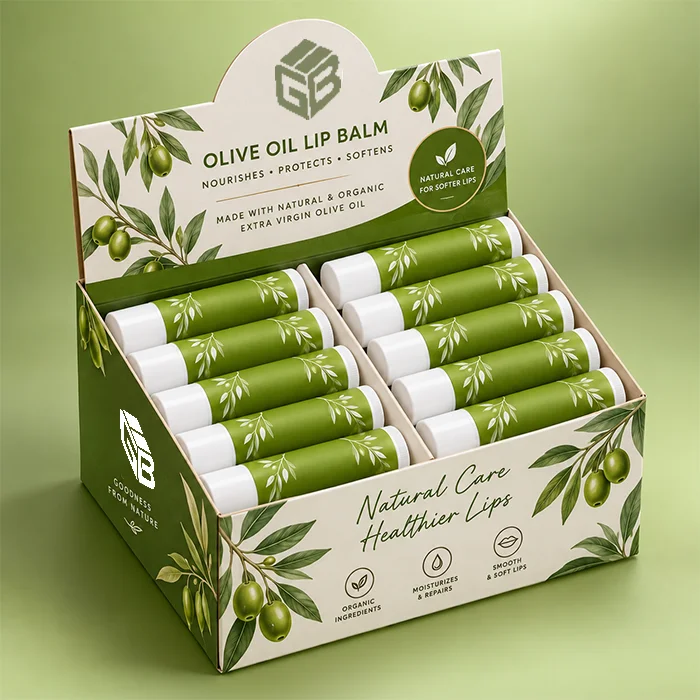
Small products need a presentation that makes them easy to find and identify. A lip balm display should give each tube, tin, or carton a defined place while keeping product names and variants visible. Lip balm display boxes bring that arrangement together with a brand’s colors, logo, and supporting information.
The starting point is organization. Before choosing artwork or decorative lip balm display boxes, establish how many products the display will hold, where it will sit, and how customers will access the contents. The finished design should serve the products rather than compete with them.
Measure each lip balm in its final retail packaging. Include caps, sleeves, hanging tabs, or other components that affect its dimensions.
Decide whether the display will hold one product or several variants. Then confirm the available space at the intended location, including any restrictions on width, depth, and height.
A useful design brief should cover:
Product dimensions and packed weight
The number of units per display
The number of variants or collections
Available counter or shelf space
Branding and information requirements
Assembly and replenishment needs
These details give the designer and supplier a practical foundation.
Plan how the products will be grouped. Different flavors, shades, formulations, or collections should have clear positions within the display.
Use readable product names or variant identifiers rather than relying on color alone. Check that the front panel does not hide details customers need to distinguish one item from another.
Review the arrangement when fully stocked and after several products have been removed. The display should remain understandable throughout normal use.
Avoid squeezing in additional units if doing so makes products difficult to reach or return to their positions.
Ask the supplier to develop the construction around the complete product quantity and weight. Review the base, sides, header, and any internal supports as parts of one system.
A fitted opening or divider should help maintain the arrangement without gripping the product too tightly. Customers should be able to remove a lip balm comfortably, and staff should be able to replenish it without repeated adjustment.
Test the structure with the actual products rather than similarly sized substitutes.
If the range changes later, reassess the fit before reusing the same display specification.
A header panel can introduce the brand, identify the collection, or carry a concise message. Choose one main role rather than trying to communicate everything at once.
Keep the logo and primary wording readable from the intended viewing position. Avoid placing important text where products or nearby fixtures may obscure it.
Review the header’s height in the actual retail setting. It should work within the available space and feel proportionate to the display.
Check the assembled sample rather than judging the header only as a flat artwork file.
Use the business’s established colors, typography, and logo as the starting point. The display should feel connected to the individual lip balm packaging.
A restrained design might focus on a wordmark and a limited palette. A more expressive direction could include original illustrations or a repeating pattern, provided the products remain easy to identify.
For several collections, decide which elements stay consistent and which distinguish each range.
Leave enough clear space around key information so the composition does not feel crowded.
Supporting copy should help customers understand the selection without introducing unsupported claims.
Check product names, variant descriptions, quantities, and any instructions before approval. Have relevant labeling and claim requirements reviewed for the specific products and intended market.
Avoid treating phrases such as “healing,” “hypoallergenic,” or “all-natural” as decorative wording. Any claim should have an appropriate basis and remain consistent with the individual product packaging.
If prices or promotions will change, reserve a suitable area for removable labels.
Ask the supplier to specify the board, printing, coatings, adhesives, and any additional components included in the proposed construction.
Choose finishes according to the design’s needs. A clear logo and well-organized layout may provide enough distinction without several competing treatments.
Inspect representative samples for fold quality, edge condition, panel alignment, and lettering clarity. Check that decorative surfaces do not make essential text difficult to read.
Keep environmental statements specific to documented characteristics of the finished display rather than its appearance.
If testers form part of the retail presentation, give them a clearly identified position separate from saleable products. Their handling should follow the retailer’s procedures.
Include any product cards, instructions, or other supporting materials in the layout trial. They should not block access or cover variant names.
Avoid adding accessories simply to fill unused space. Each element should help customers navigate or understand the range.
Review the complete arrangement as it will appear during normal use, not only in a staged image.
Ask the people responsible for setup to assemble a sample using the proposed instructions.
Look for unclear folds, awkward insert placement, or steps that require repeated correction. Confirm that the finished structure matches the intended arrangement.
Then test replenishment with the actual products. Staff should be able to identify where each variant belongs and refill the display without disturbing the remaining stock.
Keep a reference image or simple layout guide if several similar products share the same display.
Decide whether the display will arrive flat, assembled, or stocked. Review the complete packing arrangement for the chosen format.
Allow for available storage and any additional protection needed during transport. A retail-ready appearance should not automatically be treated as evidence that the display can be shipped without further packaging.
Run a trial using the final components and intended contents. Record the approved packing and assembly sequence.
Changes to the product count, structure, or delivery method should prompt a review.
Before custom lip balm display boxes with logo, compare the physical sample with the final artwork. Confirm dimensions, product fit, spelling, branding, variant information, and panel orientation.
Review the display fully stocked and partially stocked, from the customer’s likely viewing position. Check that products remain accessible and clearly identified.
Compare quotations using matching materials, printing, dimensions, and included components. Choose quantities that reflect realistic retail needs and the expected life of the collection.

This post has been authored and published by one of our premium contributors, who are experts in their fields. They bring high-quality, well-researched content that adds significant value to our platform.








Home Guide provides trusted home improvement tips, DIY ideas, maintenance guides, and interior design inspiration to help you create a smarter, safer, and more beautiful home.