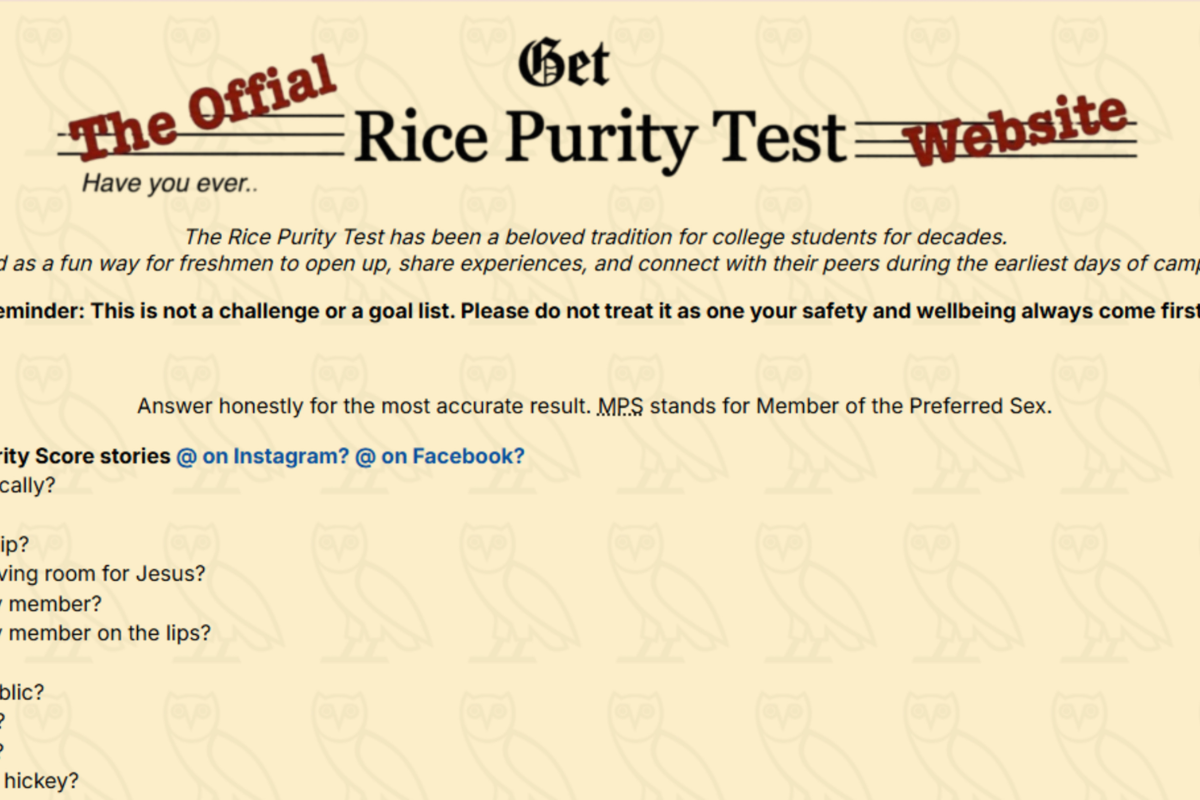
Online questionnaires can be entertaining, but their results sometimes encourage people to think more deeply about their experiences. The Rice Purity Test is one such questionnaire. It asks participants to respond to statements about different situations and then produces a score based on their answers.
Although the result is presented as a simple number, people often wonder what it actually says about them. Is a higher score better? Does a lower score indicate greater life experience? And should someone compare their result with friends?
Understanding the scoring system helps answer these questions without attaching unnecessary meaning to a number.
The questionnaire typically begins with a score of 100. Participants work through a series of statements and indicate which experiences apply to them.
Each selected statement reduces the starting score. Once the questionnaire is completed, the remaining number becomes the participant's final result.
This approach makes the calculation easy to understand. Participants do not need to evaluate complicated categories or calculate separate percentages.
If someone selects fewer statements, their final result will generally be higher. Selecting more statements produces a lower result.
Those curious about their own outcome can explore the Rice purity test and complete the questionnaire to see how the scoring process works.
It is common for people to assume that a higher score represents something more positive. However, that interpretation misses the main purpose of the questionnaire.
The result simply reflects how many listed experiences someone has selected. It does not measure kindness, responsibility, confidence, intelligence, or emotional development.
For example, a person with a higher score might have chosen to focus on education, family, personal goals, or other priorities. Another person with a lower score might have experienced a wider range of social situations.
Neither situation automatically makes someone better or worse.
Personal development cannot be reduced to a questionnaire because people grow through many different experiences, including those that are not included in the test.
Everyone approaches life from a different starting point. Family environments, cultural expectations, education, social circles, and personal values can all influence the opportunities someone encounters.
These differences help explain why two individuals of the same age may receive very different results.
For example, someone who has spent more time in a structured academic environment may have a different set of experiences from someone who has traveled extensively or participated in a wider range of social activities.
Geography and lifestyle can also influence how people interpret certain questions. What feels like an ordinary experience to one person may be uncommon or unfamiliar to another.
This is why comparing scores without considering individual backgrounds can be misleading.
Not in any scientifically reliable way.
The questionnaire was not designed to provide a complete personality profile. Its questions focus on selected experiences rather than measuring psychological characteristics.
Personality involves a much broader combination of qualities, including communication habits, emotional responses, interests, values, and decision-making patterns.
A single score cannot capture all these characteristics.
Someone might be outgoing but have relatively few of the experiences listed. Another person might be naturally reserved while having encountered more situations included in the questionnaire.
There is no direct relationship between the final number and a person's overall identity.
Social comparison is a normal part of how people interact. Friends often compare entertainment preferences, academic achievements, hobbies, and other personal interests.
The Rice Purity Test adds another subject to those conversations.
Seeing different results can create curiosity because participants begin wondering how their experiences compare with those of people they know.
Sometimes a similar score comes from completely different answers. Other times, people discover that their assumptions about someone else's lifestyle were inaccurate.
These conversations can be interesting, provided participants remember that sharing personal details is always optional.
One potential problem with popular online quizzes is the pressure to achieve a particular result.
Some participants may feel disappointed if their number is different from what they expected. Others might exaggerate answers to impress friends or avoid uncomfortable conversations.
Neither approach is necessary.
The questionnaire is intended as a casual activity, not a competition with an official winner. There is no requirement to reach a certain number or explain every response.
Honest answers make the result more meaningful as a personal reflection, while respecting privacy keeps the experience comfortable.
Once the result appears, take a moment to understand what it represents. Think about the statements you selected and whether any of them reminded you of experiences worth reflecting on.
There is no need to make major decisions based on the outcome. It is simply an opportunity to consider different aspects of your personal history.
You can also compare results with friends if everyone is comfortable doing so. However, it is better to focus on interesting differences rather than treating the numbers as personal rankings.
If certain questions feel too personal, there is nothing wrong with keeping those answers private.
A Rice Purity Test score can be an interesting way to look back at different experiences, but it should never become a judgment of personal character.
The number represents responses to a specific questionnaire, not a complete picture of someone's identity or lifestyle. Everyone has different opportunities, boundaries, and priorities, which makes direct comparisons less meaningful than they might initially appear.
Anyone interested in taking a purity test should approach it with curiosity rather than pressure. The most useful takeaway is understanding that personal experiences are individual, and no single number can define an entire life.

This post has been authored and published by one of our premium contributors, who are experts in their fields. They bring high-quality, well-researched content that adds significant value to our platform.











Home Guide provides trusted home improvement tips, DIY ideas, maintenance guides, and interior design inspiration to help you create a smarter, safer, and more beautiful home.