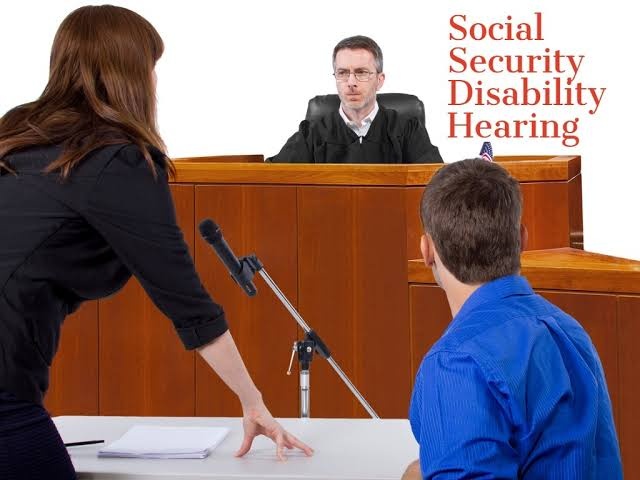
A Social Security disability hearing can be stressful, especially after months or years of waiting for an opportunity to present a case. After the hearing ends, many applicants replay the judge's questions, their own answers, and the vocational expert's testimony while wondering what those moments mean for the final decision.
However, the hearing itself does not normally provide a reliable way to determine whether a claim will be approved or denied. The Administrative Law Judge (ALJ) reviews the evidence and issues a formal decision. The Social Security Administration explains that an ALJ conducts the hearing and issues a decision after reviewing the claimant's case.
Understanding the process can help applicants avoid assuming that a difficult question or unexpected statement automatically means their claim has failed.
Many applicants search for signs that you lost your disability hearing because they want an immediate indication of the outcome. In reality, there are few reliable clues during the hearing itself.
A judge may ask detailed or challenging questions for several reasons, including clarifying:
Difficult questioning does not automatically mean the judge plans to deny the claim.
The same principle applies to vocational expert testimony. Questions about whether jobs exist in the national economy may be part of the judge's normal evaluation process.
The most important indication of the outcome is the formal written decision from the Social Security Administration.
An applicant should not assume that a hearing went badly simply because:
These events can occur in both favorable and unfavorable cases.
The formal decision explains the ALJ's findings and provides the basis for the outcome.
The ALJ evaluates the evidence in the claimant's record rather than relying solely on what happened during the hearing.
Important evidence may include:
Consistency is especially important. When medical records, testimony, and other evidence provide a consistent picture of a person's limitations, the decision-maker has more information to evaluate the claim.
A vocational expert may testify about whether someone with particular limitations could perform past work or other work. The judge may ask hypothetical questions involving different combinations of restrictions.
For example, the ALJ may ask whether a person with certain physical, mental, or environmental limitations could perform particular occupations.
An applicant should not automatically interpret the existence of available jobs as proof of denial. The judge must evaluate the complete record and determine which limitations are supported by the evidence.
Usually, no. The judge's questions and the hearing's tone are not reliable predictors of the final decision.
Not necessarily. The judge evaluates whether the hypothetical limitations accurately reflect the claimant's medically supported restrictions.
The Social Security Administration sends a written hearing decision. That decision explains the outcome and the applicable next steps.
There is no guaranteed list of signs that you lost your disability hearing before the official decision arrives. Difficult questions, a skeptical tone, or testimony from a vocational expert do not necessarily establish that the claim will be denied.
Receiving an unfavorable hearing decision does not necessarily mean that every opportunity for review has ended.
The Social Security Administration allows claimants who disagree with an ALJ's decision to request review by the Appeals Council. Generally, the request must be made within 60 days after receiving the hearing decision.
The Appeals Council may deny the request, issue its own decision, or return the case to an ALJ for further action.
If the Appeals Council denies review or issues an unfavorable decision, federal court review may be available.
Applicants should be careful after receiving an unfavorable decision. Missing procedural requirements can create additional problems.
Common mistakes include:
The SSA generally provides 60 days to request Appeals Council review, with specific rules governing when the period begins and how receipt of the notice is presumed.
An unfavorable decision should be examined carefully rather than judged only by its conclusion. The written decision may identify the evidence the ALJ relied upon, explain findings about functional capacity, and discuss vocational issues.
A careful review can help identify:
Professional guidance may be useful when determining whether an appeal is appropriate.
Waiting for a disability hearing decision can create significant uncertainty, but applicants should avoid trying to predict the outcome from the judge's behavior alone. Challenging questions, vocational testimony, and requests for clarification can all be ordinary parts of the hearing process.
The formal written decision is the meaningful indication of the outcome. If that decision is unfavorable, applicants should review it promptly and pay close attention to the applicable appeal deadline. The Social Security Administration provides an Appeals Council review process for people who disagree with an ALJ's decision.
In 2026, staying organized, understanding the written decision, preserving evidence, and acting within the required deadlines remain important steps for anyone navigating the Social Security disability appeals process.

This post has been authored and published by one of our premium contributors, who are experts in their fields. They bring high-quality, well-researched content that adds significant value to our platform.












Home Guide provides trusted home improvement tips, DIY ideas, maintenance guides, and interior design inspiration to help you create a smarter, safer, and more beautiful home.